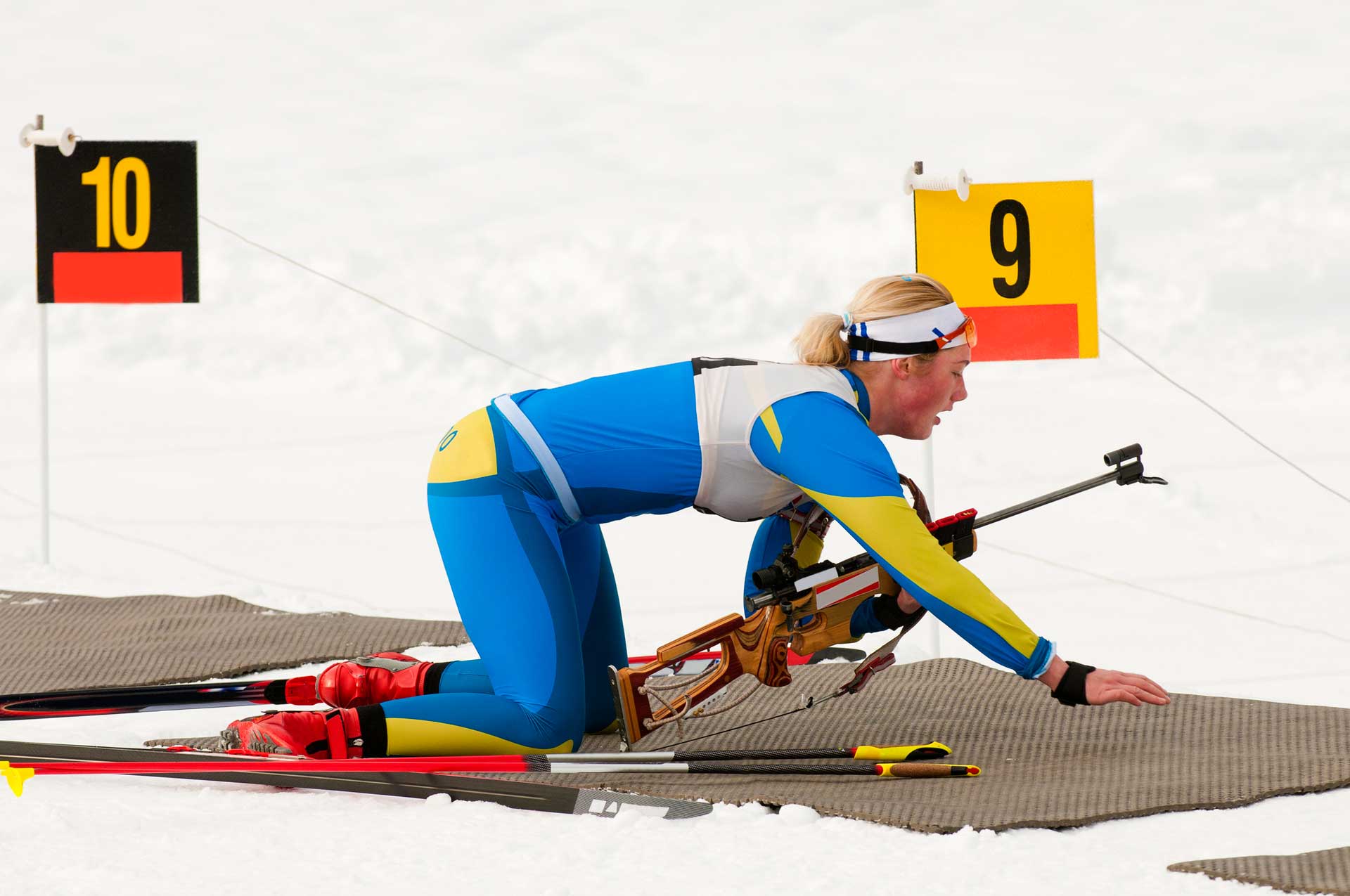
Biathlon is a cross-country ski race with interludes of target-based rifle-shooting. Each round of shooting presents biathletes with five small targets, with penalties imposed for each target missed. These penalties come in the shape of usually either an extra 150 metres to ski or one minute added to the biathlete’s time – both of which can shake up a contestant’s position in the race and intensify the thrill of both the skiing and shooting sections of the race.
"At the first Winter Olympics in Chamonix, there was a Biathlon-like sport called Military Patrol"
An impressive performance in the shooting range can catapult a biathlete to first place in an instant, and it’s this volatility that makes the sport so engaging for competitors and onlookers alike.
This February sees the start of the Winter Olympics coming to eight locations and six ski resorts across northern Italy, with the first Biathlon event taking place on February 8th. There are 11 different sets of medals up for grabs, across five disciplines: Individual, Sprint, Mass Start, Pursuit, and Mixed Relay.
Historical Context
With competitors skiing laps with rifles hoisted on their backs, an event as visually confusing as the Biathlon warrants an explanation of its origin. The first records of a cross between skiing and weaponry can be found in some late 19th century Norwegian military drills. In 1924, at the first Winter Olympic Games in Chamonix, the first resemblance of Biathlon emerged in the form of ‘Military Patrol’, a sport competed by teams of soldiers and athletes from competing nations.
The interest for the sport was catalysed during the Second World War, as the Finnish military were able to inflict significant losses against the Russian forces, sparking other countries to promote their own winter warfare abilities. Although the St. Moritz 1948 Winter Olympic Games saw an end to the Military Patrol, the sport returned twelve years later, improved and under a new name: Biathlon.
Since the Squaw Valley 1960 Winter Olympic Games the sport has remained an exciting test of endurance, speed, and patience.
The Skiing
Depending on the type of race, competitors must ski three or five laps around a cross-country course designed for the Biathlon, often involving a variety of long inclines, sharp turns and challenging declines – it’s a lap, so for every slope descended there’s a hill to climb! The distances each skier must travel varies depending on the event, from 6km per lap in the women’s relay to 20km in the men’s individual.
Taking one of the more popular biathlon events as an example, the women’s sprint is 7.5km and the men’s sprint is 10km.
As far as style goes, competitors are not restricted to a certain type of skiing although skiers tend to opt for either a classical or freestyle skating technique. Biathletes must carry their rifles (which weigh around 4kg) on their backs whilst skiing, something that only adds to the intensity of the race.
The Shooting
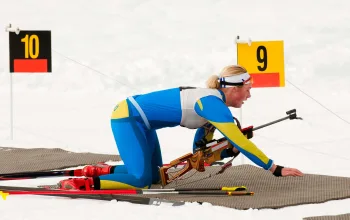
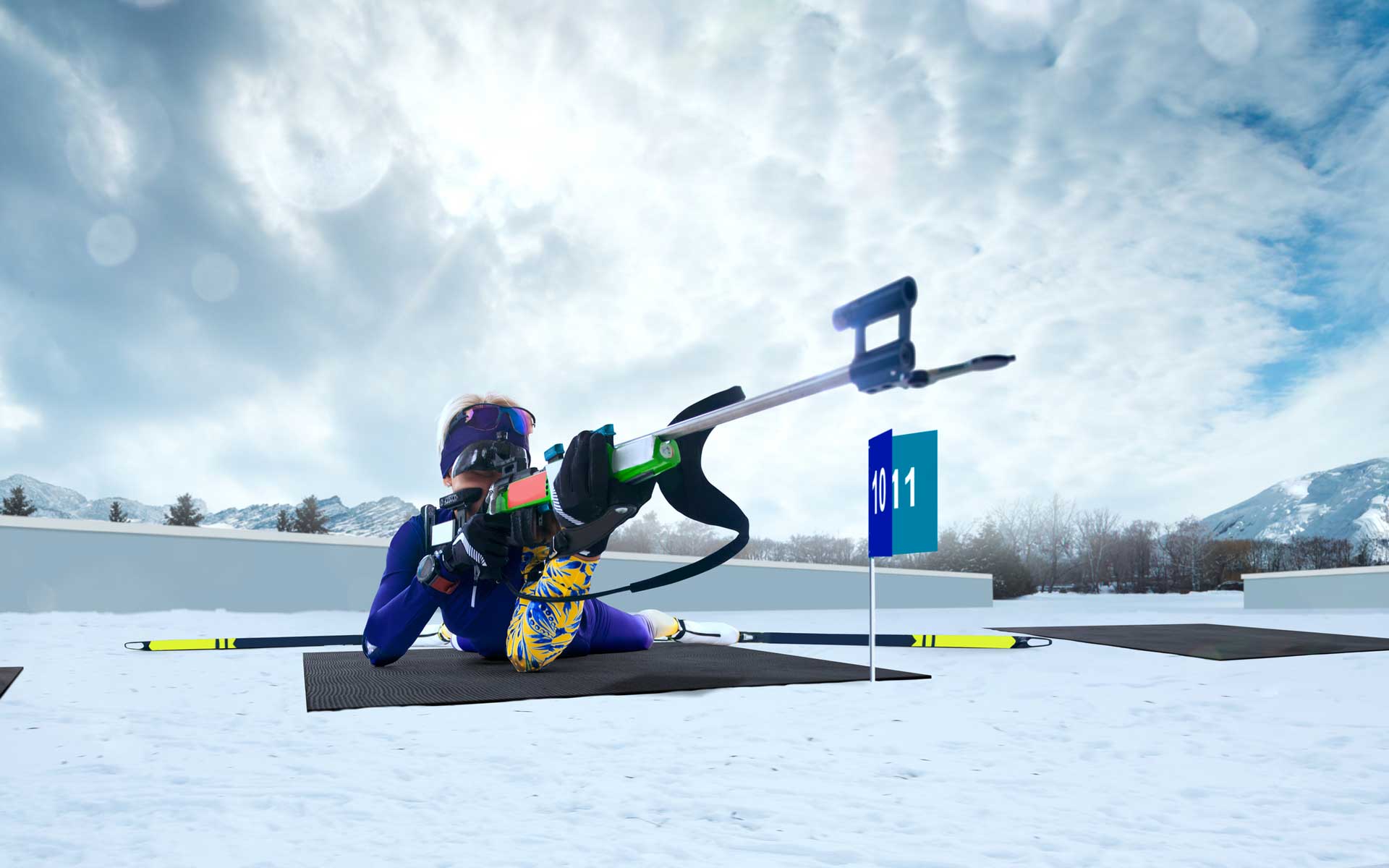
After each lap of skiing, competitors must quickly transition from the high-intensity endurance race to a calm, patient and accurate round of rifle-shooting at five small targets, 50 metres away. These rounds are known as shooting bouts and occur either twice or four times in Olympic Biathlon events.
Half of the shooting bouts are conducted prone (laying down) and the other half are conducted standing upright. The targets are 115mm wide when standing and just 45mm wide when prone. This is because the prone position allows for more stability.
Once all five shots have been fired, competitors return their weapon to their backs and continue with the skiing. However, for every target missed, penalties are issued, affecting the race constantly and significantly.
The Penalties
In Olympic Biathlon the penalties are the same for all but one event; a 150m lap completed on a designated penalty loop section of the course. Depending on weather conditions, altitude and at which point in the race the loop is skied, elite biathletes can expect to complete the 150m in 20-30 seconds.
Just one penalty loop is enough to see a competitor enter the shooting bout in first place and return to the race in last, so the importance of avoiding any penalties cannot be understated. In the individual event the penalty for a missed target comes in the form of one minute added to the competitor’s time at the end of the race.
The Starts
Like all racing sports, the start in the biathlon has a significant impact on how the race will pan out. Each event in the sport has a different type of start, and, quite helpfully, tends to be named after a description of the start. Here’s the different types of starts we’ll see at the 2026 Olympics:
Individual events are raced individually, and won by the biathlete who posts the best time at the end of the day. A time-trial of sorts, just with four shooting bouts in between. Simple. A missed target in this event will see one minute added to your time.
Sprint races follow the same format as the individual event; only that the distances are halved to 10km/7.5km, and the penalty for a missed is a 150m lap.
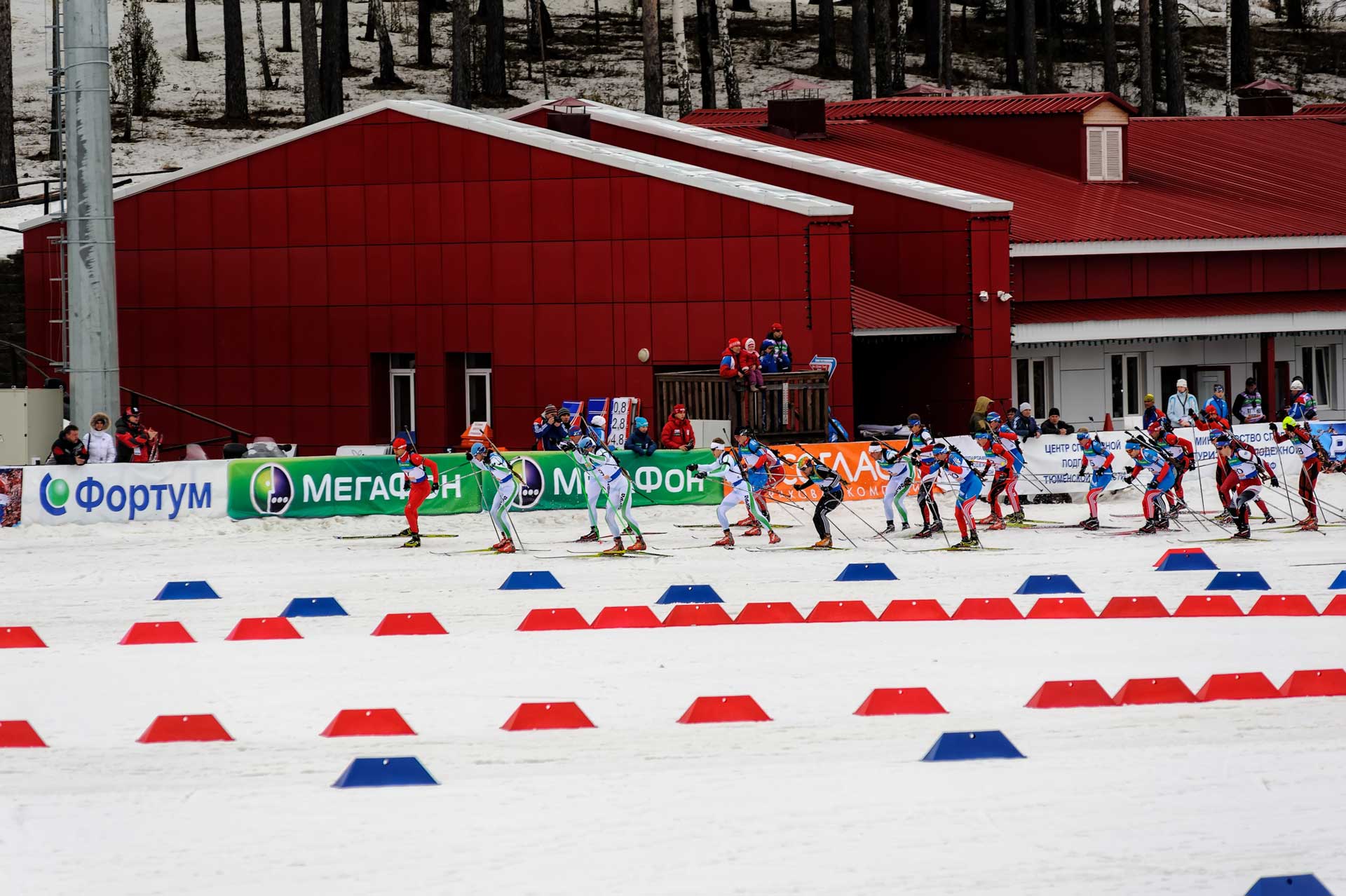
Mass start is probably what you think it is. Everyone starts at once, and we get to see everyone’s racing and shooting techniques in action, up against 30+ other biathletes.
Pursuit is completely unique in its format, and one of the most exciting events at the Winter Olympics. The winners of the individual and sprint events get to start first, followed by the remaining athletes who have a delayed start according to their performance in either event. The race pans out more like a chase, which makes for an incredible edge-of-your-seat viewing experience.
Relays follow the style of a mass start, only with the first members of each relay team (of course). The first 100m of a relay must be skied in classical style, so that the leading athlete’s ski tracks aren’t disruptive to those who follow them.
2026 Beijing Winter Olympic Games Location
At this year’s Milano Cortina Winter Olympics, the resort of Antholz / Anterselva (which has both German and Italian names, because its in the German-speaking province of Süd-Tirol in northern Italy) will host every Biathlon event. The venue, which is used for Biathlon World Cup events every year, has been adapted to accomodate up to 19,000 spectators in the grandstands and around the track.
For a full list of the different resorts hosting events at Milano Cortina check here.
What Separates The Best From The Rest?
Biathlon is a sport like no other, and its athletes continue to inspire sports scientists around the world. The combined nature of the sport has seen it been compared to jogging up twenty flights of stairs, and then attempting to thread a needle – five times over; it just shouldn’t be possible. The cool, calm and collected biathletes though don’t care for human limitations.
After operating at maximum intensity in the cross-country skiing race, biathletes must then adopt a tranquil mind and body to stabilise and perform at the shooting bout.
Elite biathletes are able to bring their heart rate down from highs of up to 180 BPM down to 140 BPM. Biathletes train this specific skill, and Poland’s Monika Hojnisz has proven her ability to drop her heart rate from 140 BPM down to 70 BPM in just 45 seconds. Forget about nerves as well. There’s no places for the shakes if you want to be successful in an event as demanding as this.