- Details
- Written by: Tristan Kennedy
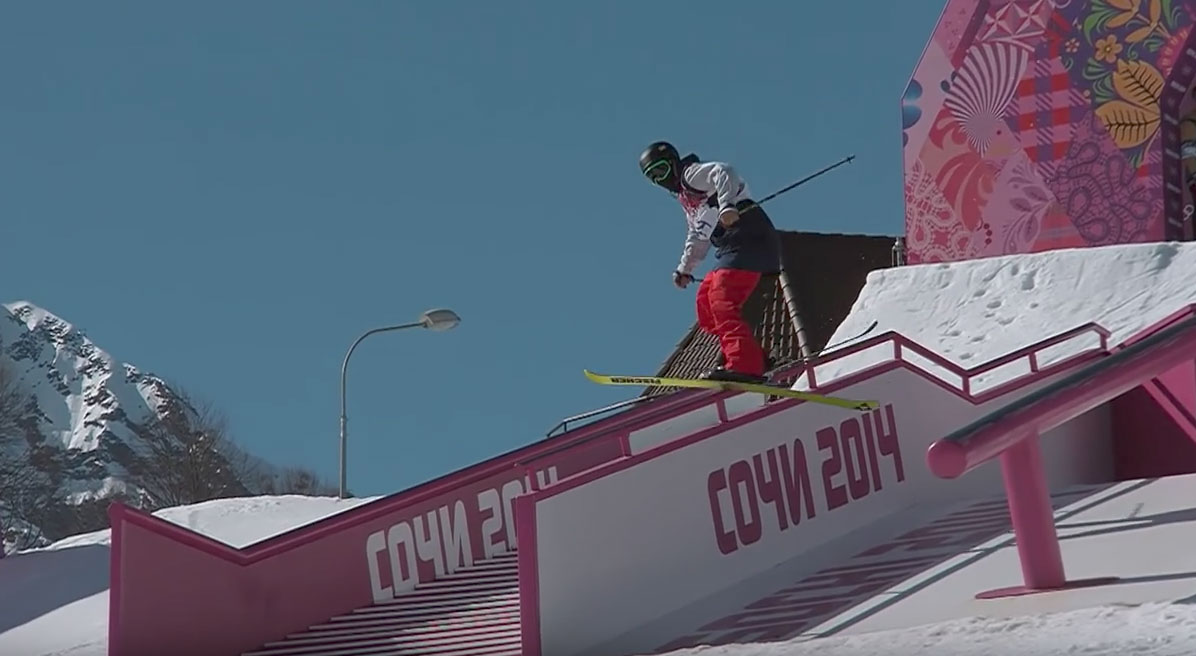
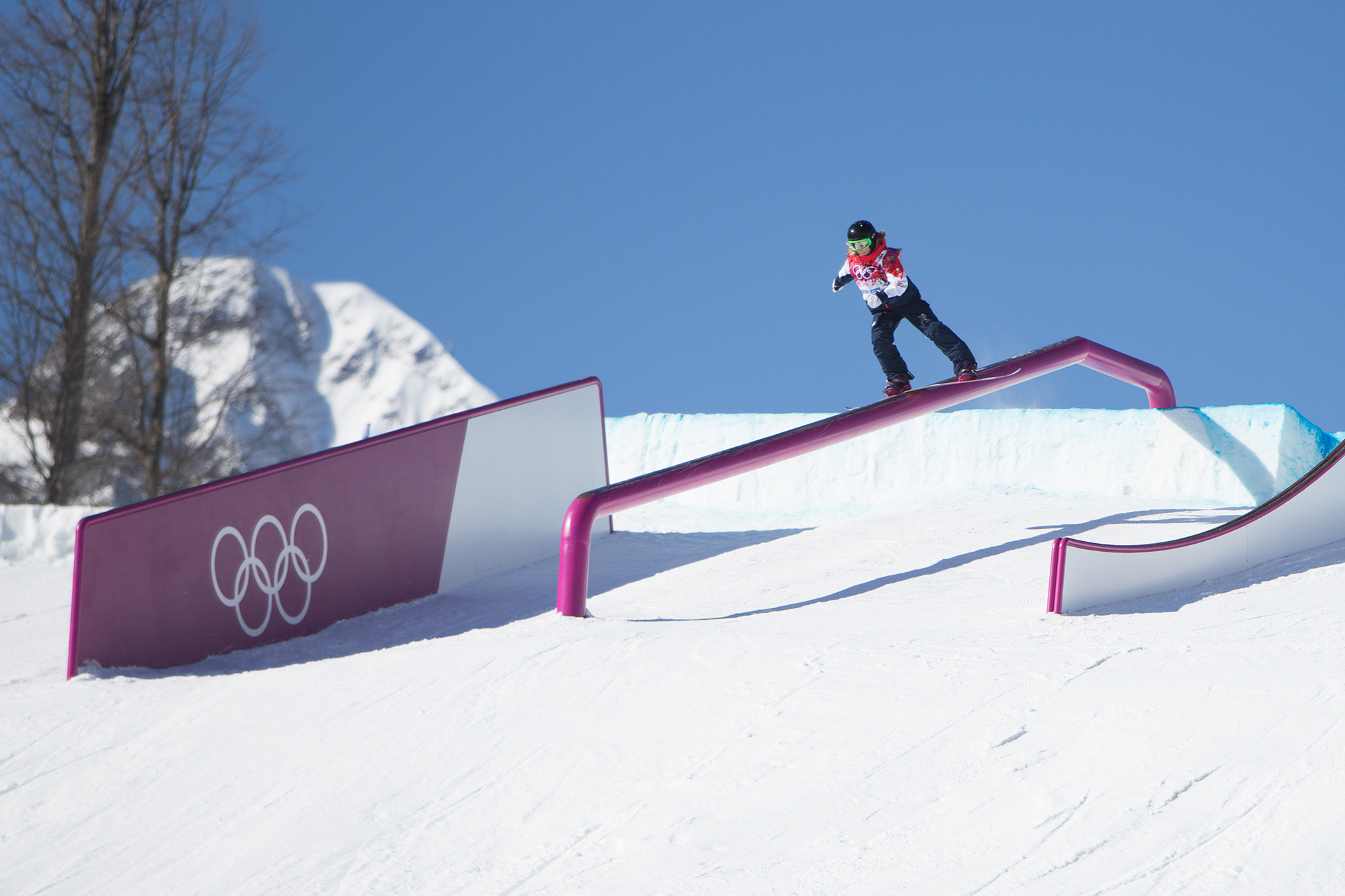
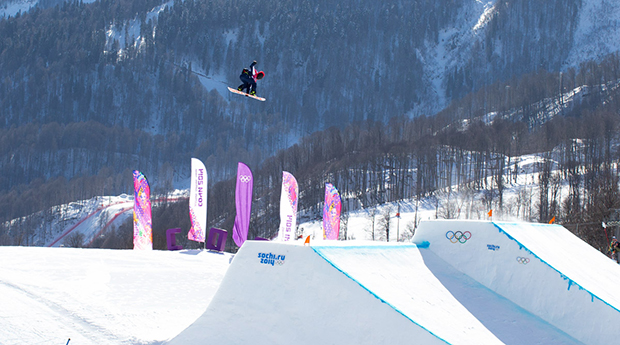
Both the skiing and snowboarding versions of slopestyle became Olympic events for the first time at Sochi 2014. The discipline involves riders taking it in turns to go down a course consisting of obstacles such as rails, jumps, and various other park features. Points are scored for originality, amplitude, and the execution of the tricks.
History of Slopestyle
Slopestyle was developed as a snowboarding competition format in the late 90s and early 2000s at the Burton Open Series and other events that formed part of the now defunct Ticket To Ride (TTR) world tour, as well as the X Games. The terrain parks of the era increasingly began to include rails alongside jumps and halfpipes, and the idea was to create a contest format that reflected how most ordinary freestyle snowboarders actually rode the mountain.
As twin-tip skis (first released by Salomon in 1997) made it possible for skiers to land backwards, they too started competing in slopestyle events. The first X Games slopestyle contest was run in 2002 and was won by the legendary American skier and weed enthusiast Tanner Hall. Hall would later try to take on Jamaican citizenship in a bid to compete at the Olympics.
The other freestyle skiing and snowboarding events that feature at the Winter Olympics are moguls, Big Air, halfpipe and ski cross/boardercross. There are also older skiing events that predate the twin tip revolution, like moguls and aerials.
How is Slopestyle Judged?
As with any judged sport, the process of judging slopestyle in the Olympics has come in for some criticism. At the last Olympics in Beijing in 2022, the judges held their hands up and admitted they'd made a mistake after a TV replay, which they hadn't seen at the time, showed a rider failing to make a grab. But that was an unfortunate incident, and all efforts will be made to ensure its not repeated.
And overall, when you look at the process and the criteria used to judge slopestyle, it actually makes a lot of sense. Here's how it works.
A panel of scoring judges each write down their scores, deducting points if they think a rider has fallen slightly short on any of the obstacles. The highest and the lowest scores are then discounted to avoid any outliers or bias. The final score is an average of the remaining scores.

“Sometimes when there’s a very tight decision, the head judge will leave you a little bit more time so you can compare the runs.”
A head judge, who doesn’t give his own score, oversees the process. Iztok Sumatic, a Slovenian who worked as the head judge at Pyeongchang 2018 and Beijing 2022, explained to our sister title Whitelines: “Sometimes when there’s a very tight decision, the head judge will leave you a little bit more time so you can compare the runs.
"So you have your memory board, where you put down all the tricks, all plusses and minuses and stars and smileys and whatever you put down, and you look back at that and compare the runs.”
This is why judges sometimes spend longer deliberating, although they never talk to each other or compare notes. Sumatic also said: “At the end of the day it’s a subjective opinion but if the highest and lowest scores drop out then you get an objective score at the end. It’s a democracy.”
What are the Slopestyle Judging Criteria?
The points given by the six scoring judges are out of 100 and are awarded for overall impression, based on six key criteria.
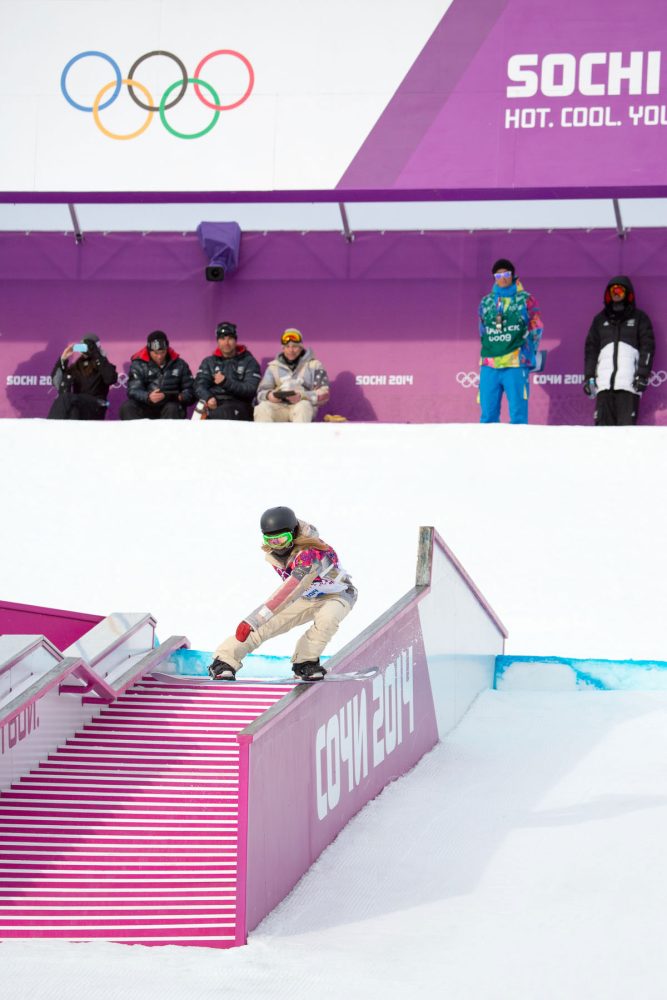
Amplitude – How big a rider or skier goes over the jumps or off the rails. However unlike halfpipe, bigger is not always better. If a rider totally overshoots a landing for example, they won’t be scored as highly as if they land right on the sweet spot.
Difficulty – It goes without saying that some tricks are more difficult than others. So for example a 1620 will score higher than a 1440 over a jump, and a 270 onto or off a rail will score more highly than hitting it straight.
Execution – How well a skier or rider executes a trick. Broadly speaking, this equates to “style”. Landing cleanly will score you more than putting a hand down. Similarly holding a grab for the whole spin will get you more points than just tapping your board (or skis).
Variety – How different a rider’s tricks are. Judges like to see riders and skiers mixing it up and showing they can spin all four ways. As a snowboarder if you do three identical 1620s off the three kicker features, you won’t score as highly as someone who mixes it up by spinning frontside on the first one switch backside on the second and backside on the third. Similarly with skiers and leftside or rightside spins.
Progression – If a trick is brand new ie. has never been landed in competition before, it will score more highly. Sage Kotsenberg’s 1620 with a unique holy crail grab in Sochi is a great example of this. Judges want to see the sport being pushed forwards.
Where will Slopestyle Take Place at Milano Cortina 2026?
The ski and snowboard slopestyle events at Milano Cortina 2026 will be contested on a specially-built course in the Italian ski resort of Livigno. For a full guide to the ski resorts hosting events at the 2026 Winter Olympic games, check here.
When will Slopestyle be on at Milano Cortina 2026?
The events will be on at the following times (these are UK times):
Freeski Slopestyle
Saturday 8th February, 09:30-11:45: Women's freeski slopestyle qualification
Saturday 8th February, 13:00-15:15: Men's freeski slopestyle qualification
Monday 9th February, 11:30-13:20: Women's freeski slopestyle final
Tuesday 10th February, 11:30-13:20: Men's freeski slopestyle final
Snowboard Slopestyle
Monday 16th February, 10:30-12.30: Women's snowboard slopestyle qualifiers
Monday 16th February, 14:00-16:05: Men's snowboard slopestyle qualifiers
Tuesday 17th February, 13:00-14:30: Women's snowboard slopestyle finals
Wednesday 18th February, 12:30-14:00: Men's snowboard slopestyle finals
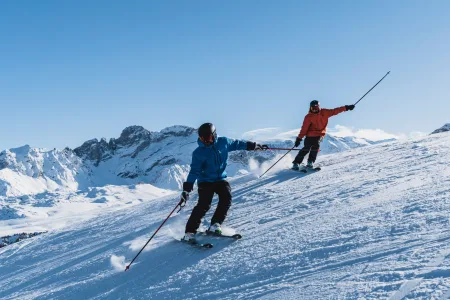
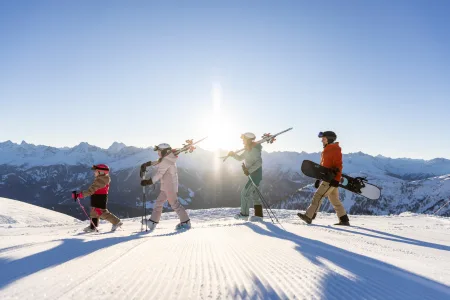
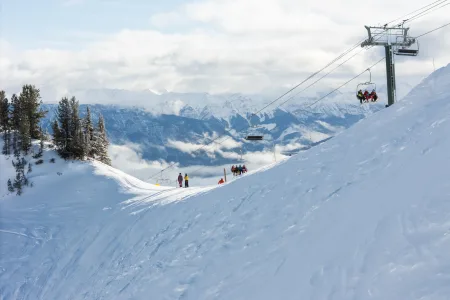
Read our full guide on how to stream the Winter Olympics and when the ski and snowboard events are on in Milano Cortina.
Key Slopestyle Terminology
If you’re new to slopestyle, chances are you’ll hear a lot of words and phrases you’re not familiar with. Common names for snowboard grabs, for example, include mute, indy, nose, melon, stalefish and tail. Ski grabs names get even crazier: there’s even one called the screaming seaman.
Spins over jumps or rails are measured in degrees 180, 360, 540, 720, 900, 1080, 1260, 1440, 1620, 1800, and 1980 are the digits to listen out for.
This Olympics we may even see 2160 or even 2340 spins in Big Air—something that only a handful of riders have ever landed so far—although this is unlikely in slopestyle, where the jumps tend to be a little smaller, and riders have to concentrate on nailing their whole run smoothly.
Sometimes, trick names are shortened to just the first number and a grab name. For example, athletes may land a “backside 9 tail” or even just a “back 9 tail”.
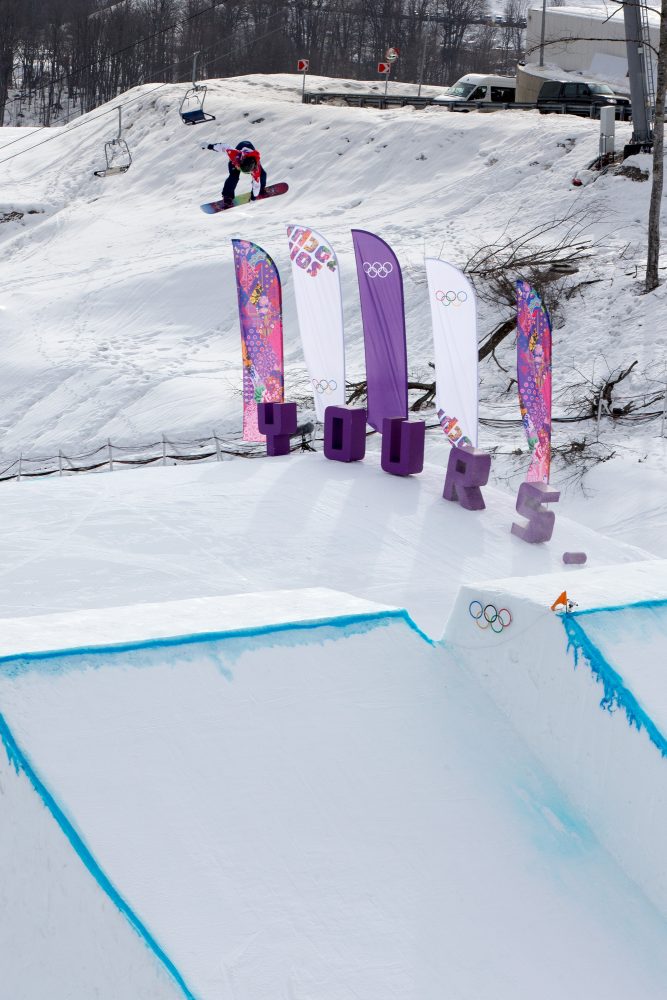
Corks might bring to mind those two bottles of fizz that you’ve been holding back for a special occasion, but in slopestyle they refer to spins that are off-axis, which orientate the rider sideways or upside-down with their head and shoulders dropping below the level of their feet.
A double cork spin involves the rider’s head dipping twice, a triple cork three-times and so on.
The frontside/backside stuff is easy to remember. If the rider has their back to the direction of travel on take-off, this is backside. Chest forward on take-off is frontside. On rails, it’s about whether you approach the rail with your chest closest to it (frontside) or your bum – it’s not about which direction you slide down the rail.
Instead of frontside and backside, skiers talk about leftside and rightside spins.
You’ll often find commentators talking about riding switch. In skiing this means going backwards, in snowboarding it means riding with your un-natural foot forward. So a “switch back 10 double” is a trick that involves riding the wrong way off a jump, spinning 1080 degrees, and dipping your head below your board twice. Still following? Just to make things even more confusing, switch frontside spins are more commonly known as cab spins.
The Competition Format for Slopestyle at the Olympics
There are two stages in the event. First, the qualifiers, in which the 30 athletes who've qualified for the Olympics will have two chances to throw down their best run. The best score counts, with the top 12 making it through to the final.
The final will be held a day or two days after the qualifiers, and all riders start again on equal footing. The only advantage of qualifying in first place is that riders and skiers drop in reverse order in the final—so the first place qualifier can see what everyone else has landed before deciding they have to drop.
Each rider gets three goes at landing their best run in the final, with only the best score counting. Most riders will try and put down a "safety run" first, and then if they land that, try to improve their score on runs two and three.