- Details
- Written by: Dan Wildey
I’m lying silently in a snow hole. It’s about 10 feet deep and only just wider than my middle-aged middle. I’ve had to wriggle backwards into the cold unknown and now I’m having to ignore my rising claustrophobia.
I can’t begin to imagine how it would feel to have ended up here involuntarily; even though it’s barely touching me, the palpable weight of the snow above me is oppressive. Without the yawning opening right in front of my face, panic would arrive in seconds.

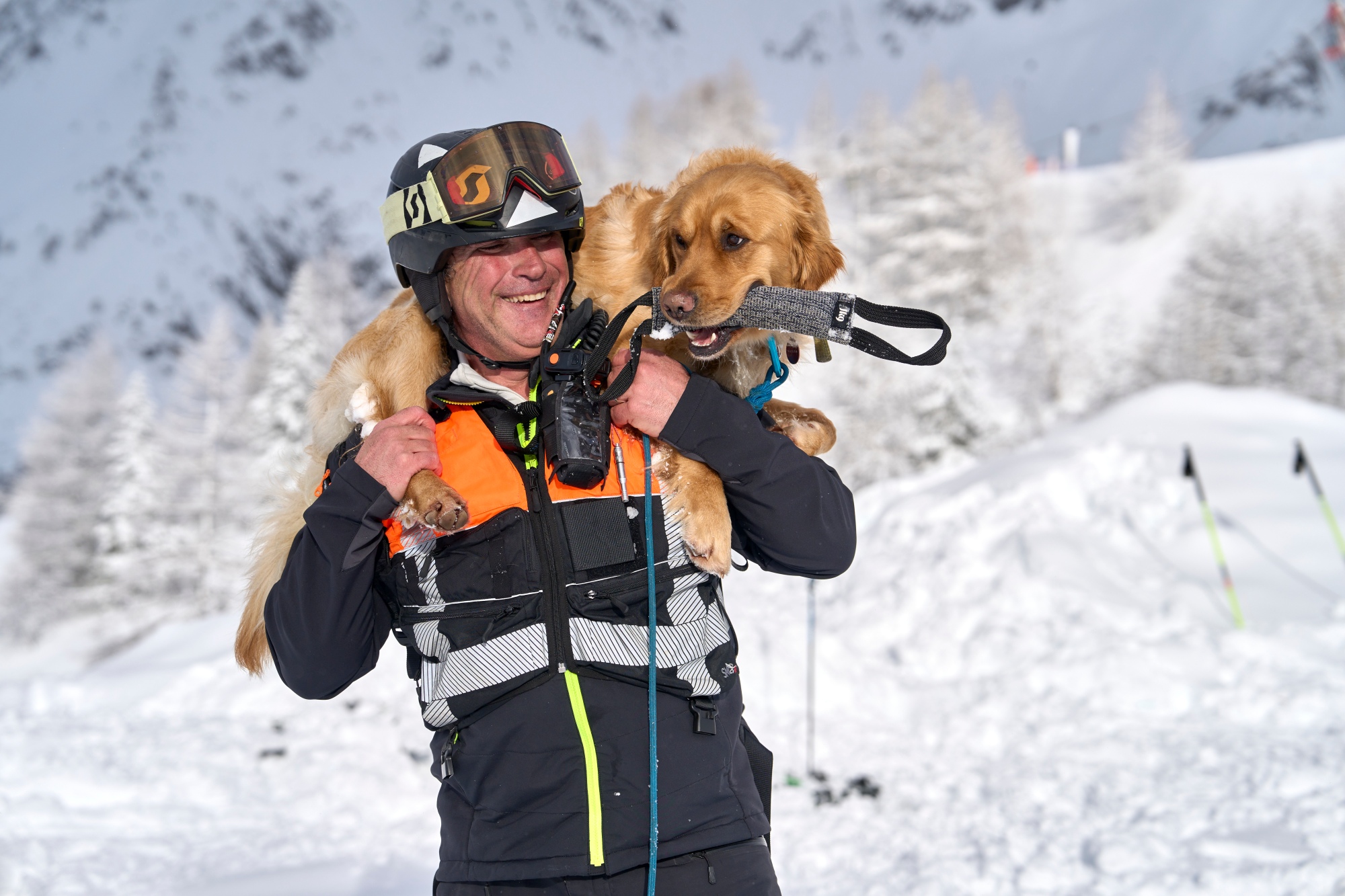
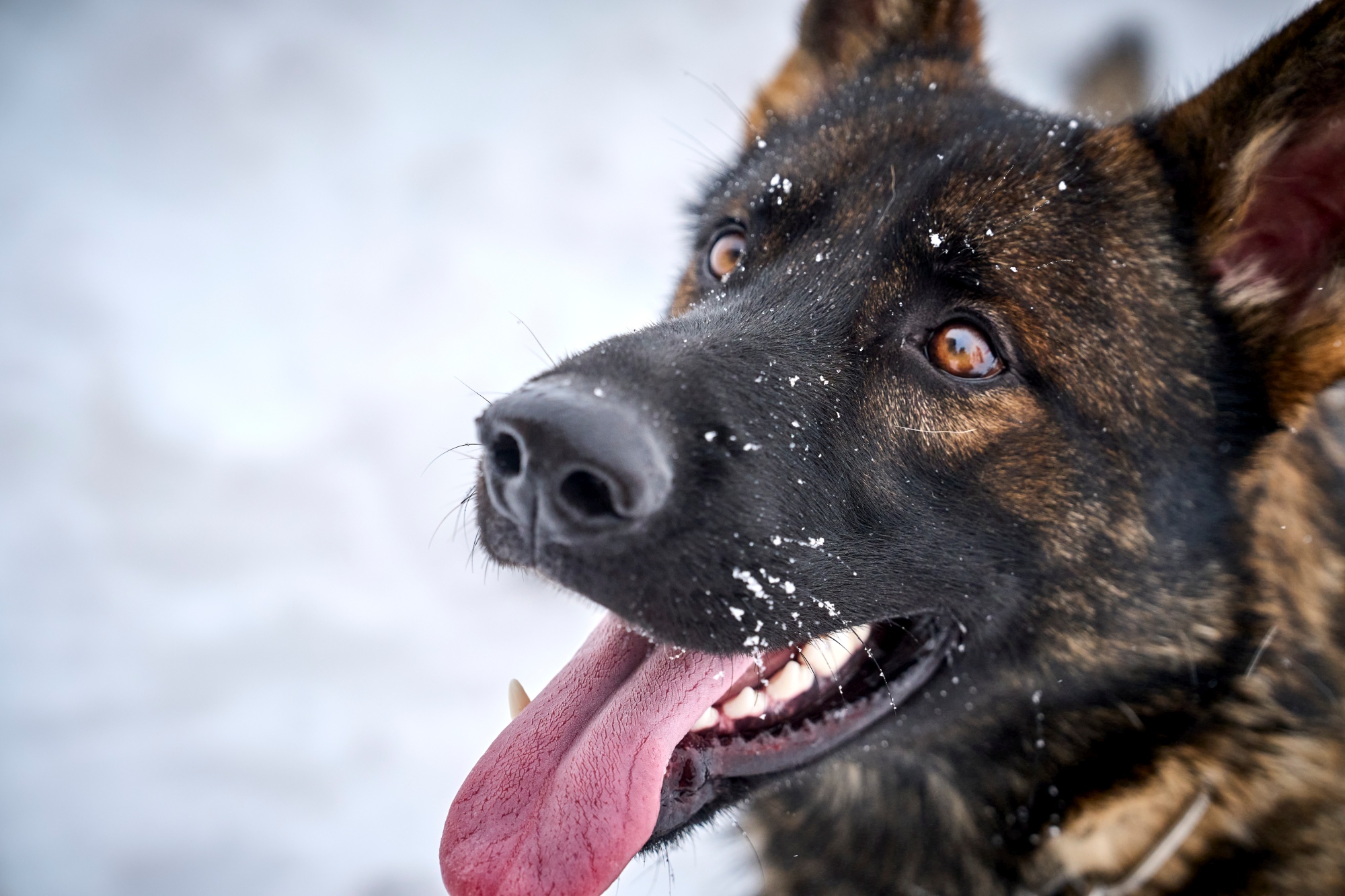
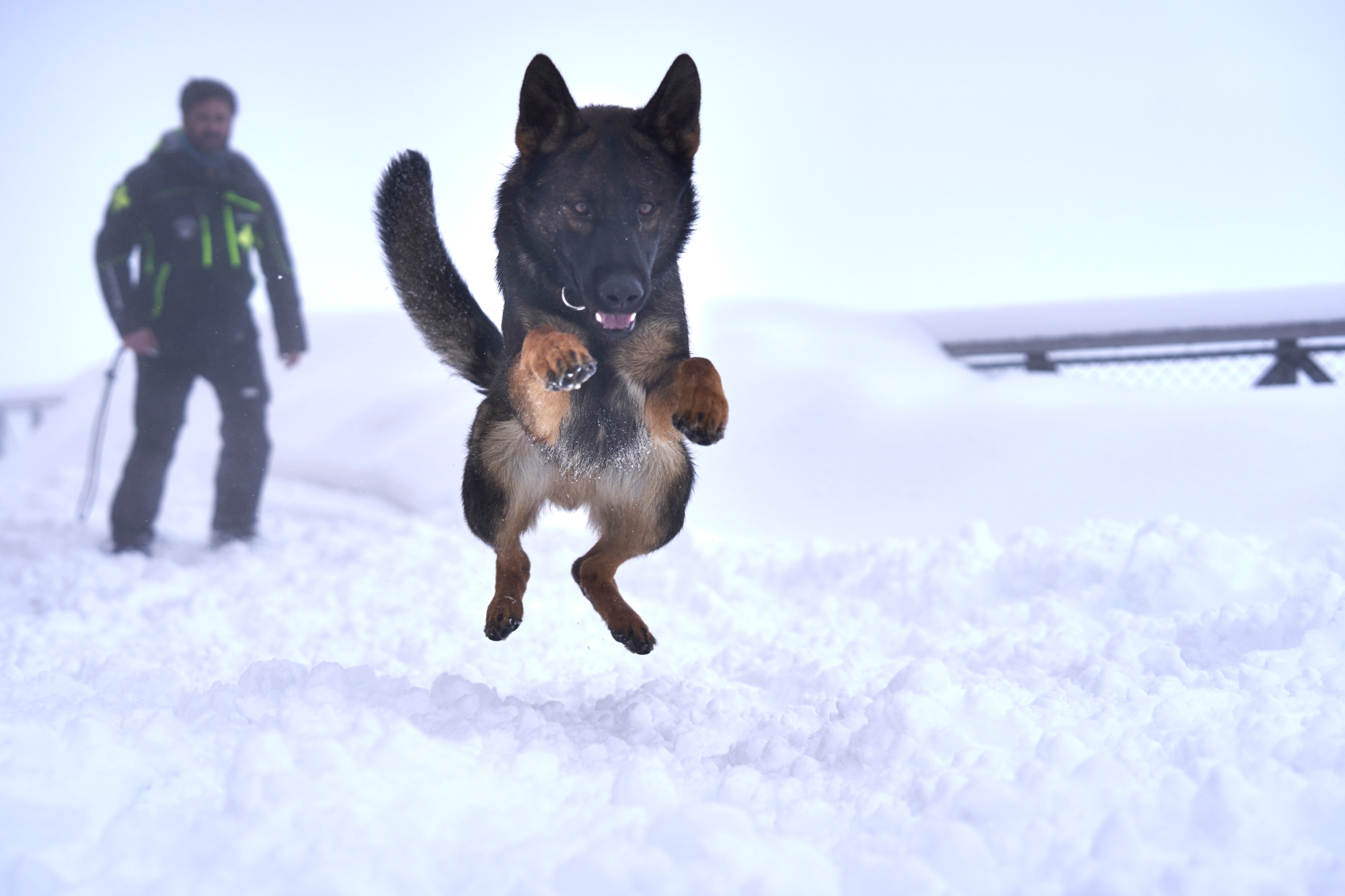
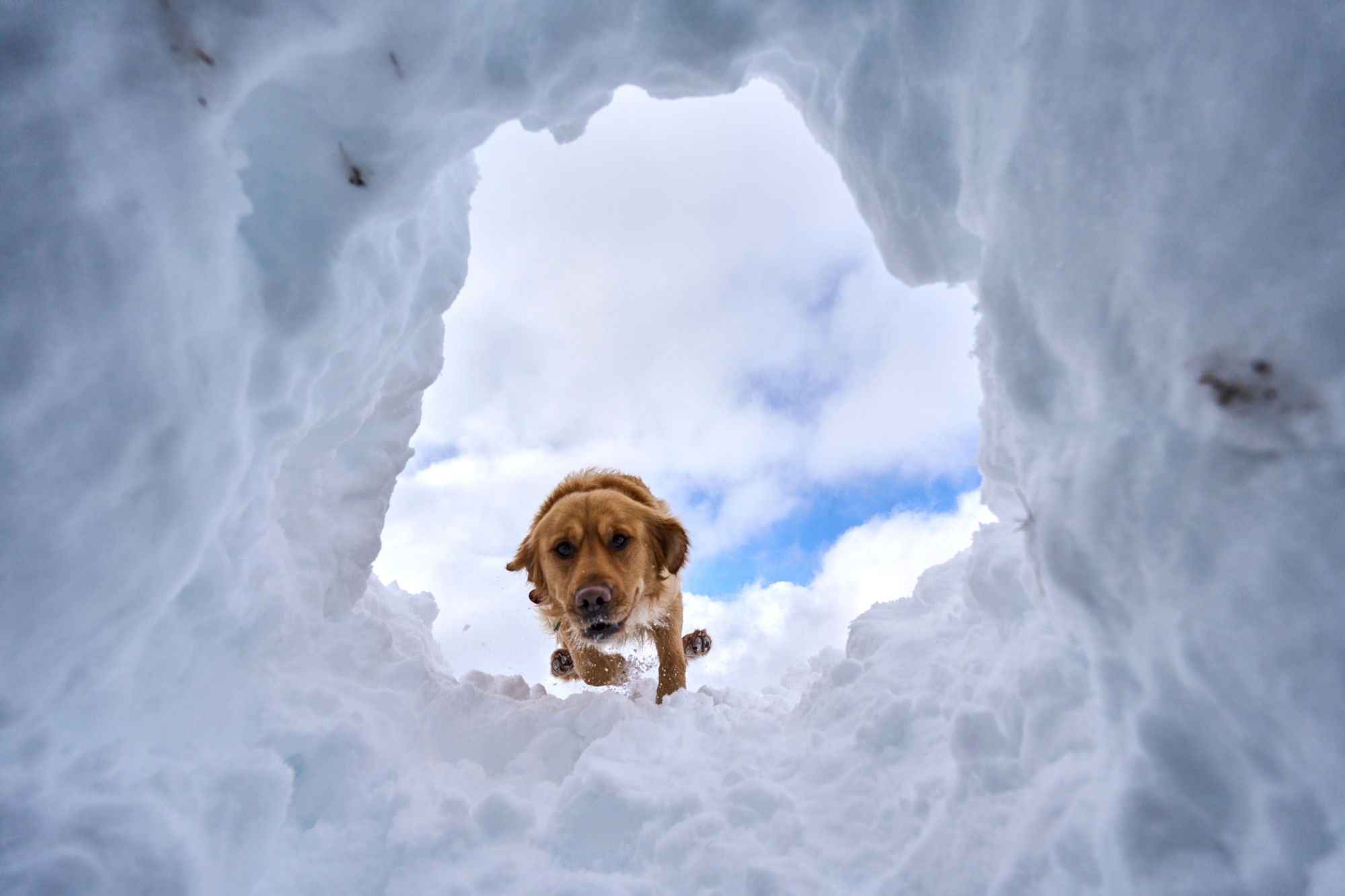
On this day it is my saviour who arrives in seconds. No sooner have I heard the distant call of the ski patroller releasing the hound, than the happy face of Utah—the highly-trained resident rescue dog at Grand Montets in the Chamonix valley—is spraying snow into my face and trying to drag me from the hole by the stuffed toy we’re suddenly fighting over.
I’ve seen the same display a few minutes earlier from a distance, when another volunteer “victim” reverses into a similar snow hole. A few have been dug into the side of the mountain over an area of a couple of hundred metres, and I watch from an elevated vantage point as Bernard Luc—30-year veteran of the ski patrol—sets Utah on the scent. Each time, her precision is unerring, making a beeline straight for the correct hole. And her speed across the chopped up, snowy terrain is incredible.
As if reading my thoughts, Bernard explains how a dog can cover a search area many times faster than a person with a transceiver, and that the overview they provide is invaluable for targeting the search. Today, the proliferation of technology means rescuers like Bernard employ many different methods to find victims. But man’s best friend still has a role.
Tails as old as time
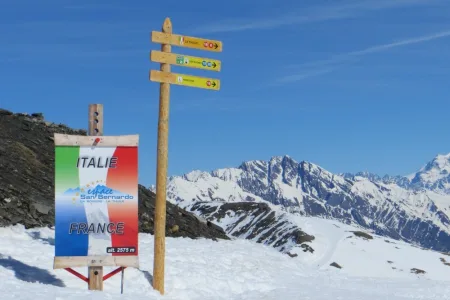
Dogs have been used in mountain rescue situations for over 300 years. Written records from the monastery on the Great St Bernard Pass, which connects Italy’s Aosta Valley to the Swiss canton of Valais, tell of monks using specially-bred dogs to help travellers stranded in the snow as early as 1707. The friars, who live year-round at 2,469m above sea-level, supposedly never trained the dogs; the younger dogs would simply learn their rescue techniques, such as licking a prone victim to warm the body, from the older ones.
One particularly famous animal, a dog named Barry, was said to have saved as many as 100 people’s lives between 1800 and 1814. Barry’s stuffed body is now on display in Bern, but his name lives on in the Barryvox—a popular series of transceivers by the Swiss brand Mammut—and of course, the St. Bernard breed, of which he was a precursor.
From the Swiss Alps, the use of dogs spread around the world. And although St Bernards are no longer the preferred breed for avalanche situations (they’re too big to fit in a helicopter, and too heavy to be easily lowered into tight spots) their canine cousins continue to save lives—including in the UK, where dog teams are a vital component of the country’s volunteer Mountain Rescue service. They’re not just useful for finding lost skiers or hikers, either, according to Kate Hunter, who covers the Scottish ski resort of Glenshee with Bodie, her Collie/Springer cross. “She’s great PR,” Hunter says. “She’s never been on a live avalanche search but she’s been an amazing asset for Glenshee.”
Where dry and dour safety information might not be engaging, a cute canine face cuts through. “Bodie is great with kids, and she really gets people listening and thinking about whether they should be skiing in avalanche terrain.” In the French Alps, where both skiers and avalanches are infinitely more common, hard-working dogs continue to save lives. Just weeks before my visit to Chamonix a group of four skiers, none of whom were wearing transceivers, were recovered by dogs from an avalanche in Val d’Isere—two of them alive.
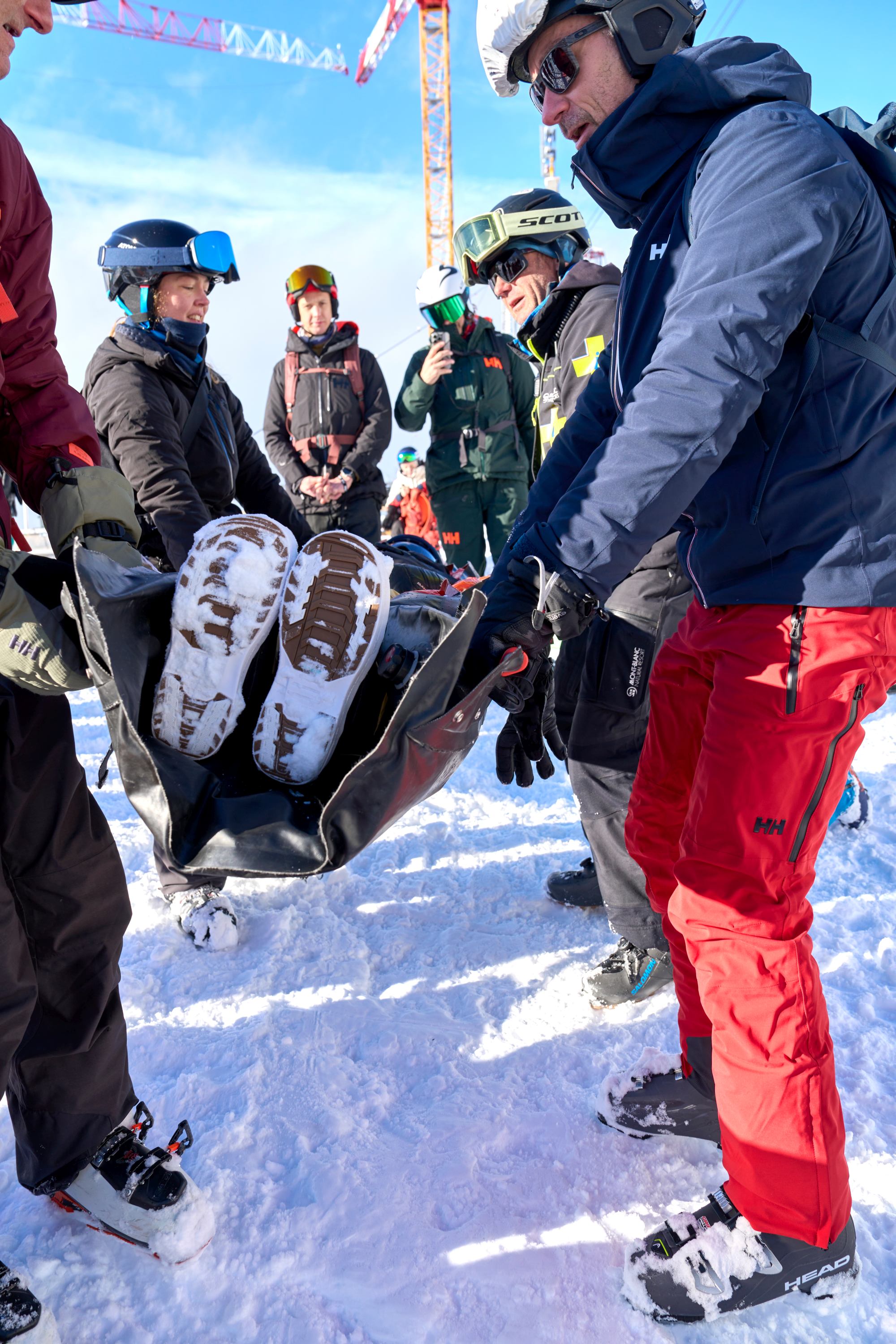
Playing fetch, but for real
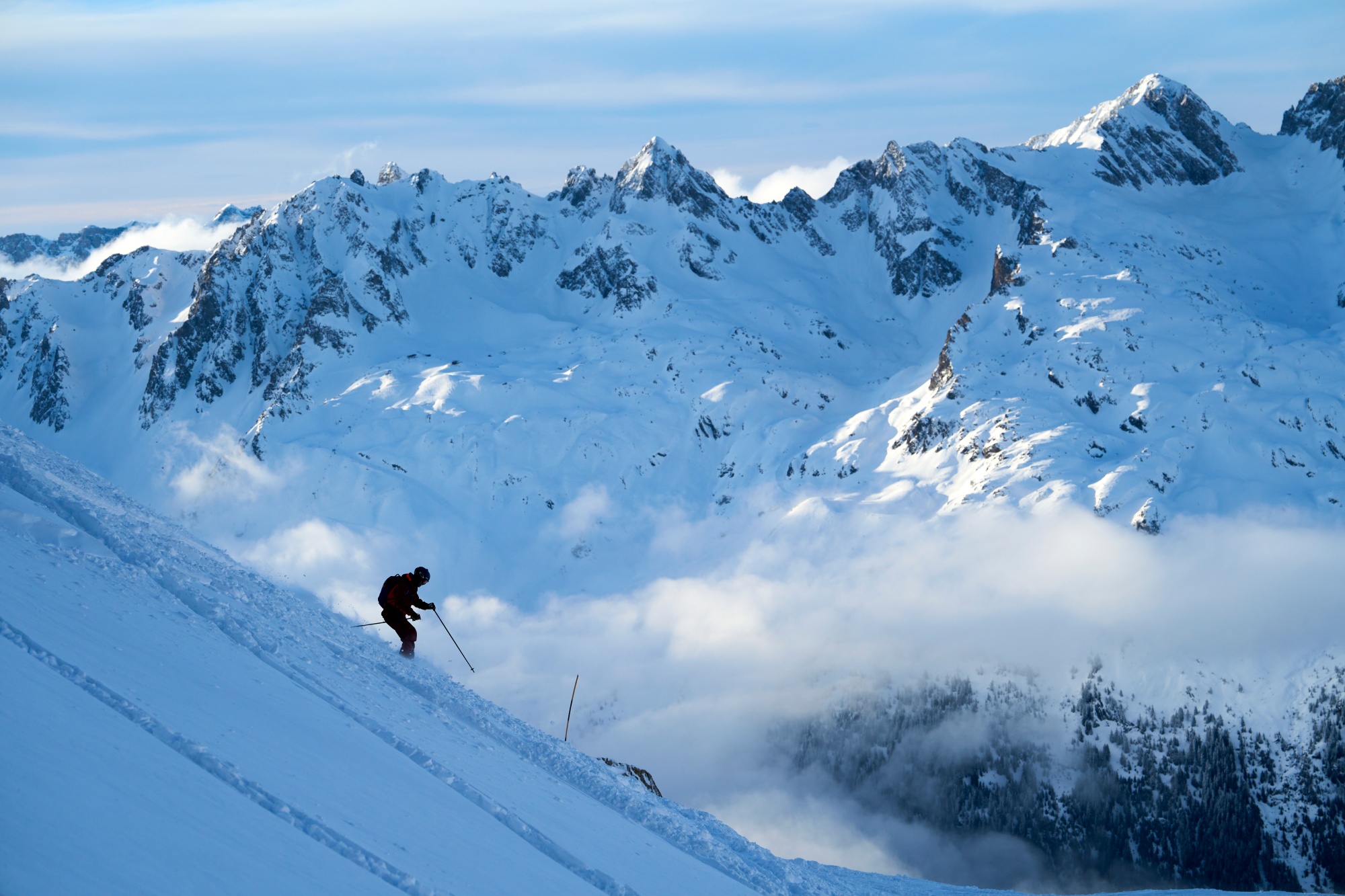
My day of watching the dogs at work begins at the Le Tour / Vallorcine / Balme ski area, at the north-eastern end of the Chamonix valley. There’s a heavy snow storm, so the ski patrollers—and their canine companions—are up well before dawn, preparing the slopes.
All ski patrollers start out as generalists, Seb Delacquis, the dog handler at Le Tour, explains. Everyone takes the same diploma, and can then choose their specialism—in explosives, weather, or dog handling. Delacquis, who started specialising 13 years ago, has just taken on his second dog. It’s a real commitment, he explains. These dogs are not just a tool to be used at work—they live with their handlers, and the handler commits to the dog for life. “It’s like having a child. Sometimes you look in each other’s eyes and you feel like you understand each other” Delacquis explains.

He began training with his first dog, Ilky, in 2012, he explains. And they do train together; when a dog retires the handler’s qualification lapses with it, so the training begins again in a new partnership. The collaborative element is so essential that part of the final assessment is on how Delacquis reads and interprets his dog’s behaviour - whether he smells up, down, how he reacts to smells and other stimuli.
One crucial element of this behavioural interpretation is how Seb recognises Ilky’s “alert.” Dogs will all respond individually when they’ve located what they’re searching for. Some may alert actively by barking or scratching, but some may display a passive alert such as simply sitting.
Delacquis’ proudest memories of working with Ilky included obtaining the diploma (“the result of all the time and effort, and also money,” he says). But more importantly, “getting to the site of an avalanche and Ilky just behaving exactly as I’d hoped.”
“The best thing about the job” he continues “is the relationship between you and the dog and applying it to work. There was a springtime avalanche we arrived at, with big blocks of snow and Ilky looked back at me as if to say ‘I need some help getting up here.’ I understood the meaning and lifted him up onto the debris.”
Changing of the guard dogs
In place of the once-ubiquitous St Bernards—which were phased out as helicopters became more common, from the 1950s onwards—most avalanche dogs are now Border Collies, Golden Retrievers, or German Shepherds. Delacquis’ new dog is a 10-month-old German Shepherd named Vegas. (Ilky, now happily retired, still lives with him at home, of course). Handlers go to different breeders for different job requirements, he explains, and picking the right dog is a crucial part of the process. From any given litter you don’t want to go with either the most lively or the least lively. But sometimes, the decision is out of your hands. “Vegas wasn’t my first choice. But Vegas chose me,” he says.
As for which breed to work with, it’s a matter of personal preference. German Shepherds are quite forgiving in training, in that any mistakes can be rectified later, whereas with Border Collies it is more difficult to correct, he says. Training starts at two months old. At first, they use a tug of war toy scented like a person, to make it a game. When it comes to a real world rescue the victim becomes the toy. Incredibly, they can also be trained to smell carbon dioxide coming out of the snow, Delacquis says.
The specialised nature of the training is evidenced by the fact that avalanche rescue dogs are not permitted to perform search and rescue operations in other scenarios. Although Vegas could easily find victims buried in the rubble of an earthquake for example, he would instinctively try to dig to recover them, and therefore seriously damage his own paws.
Sniffing out danger
On the mountain, dog teams would usually arrive at an avalanche via helicopter, and if possible, would always cover the terrain by heading into the wind, to give the dogs the best chance of picking up a scent. From Chamonix, they can be called to avalanches all over the Alps, so they have to be ready to go at a moment’s notice.
“The hardest things,” Delacquis tells me, “are when people call in avalanches with no specific location. And when people call in an avalanche saying they ‘saw tracks.’ It’s difficult because the tracks could have been there for days before an avalanche, but of course we cannot take that chance.”
“ It’s not just work, you take the dog home. Sometimes you look in their eyes & feel like you understand each other”
The way he sees it there are two major commitments for the dog handler. “This is your dog, it’s not work. You take the dog home.” The second is the responsibility for calling an end to a search. The dog performs the final sweep in an avalanche, and it is the handler who interprets whether there are any victims left to find.
Delacquis has never actually found a body in an avalanche. In this day and age the rescue dog is just one tool among many, and especially in Chamonix, most skiers know to use a transceiver along with a shovel and probe. Increasingly, drone searches are becoming more common, and many skiers now carry GPS trackers.
Yet despite all this modern technology, there’s still a place for dogs like Vegas, Ilky and Utah. Having watched them work up close, there’s something reassuring in the idea that, hundreds of years after the first search dogs were deployed, man’s best friend is still on-hand to help out, should the worst happen.
Snow How
Our trip
Dan’s day with the dogs was supported by Helly Hansen, as part of their campaign to support International Ski Patrol Day, which takes place on 10th February each year. Helly Hansen are the official kit suppliers of the Chamonix Ski Patrol.