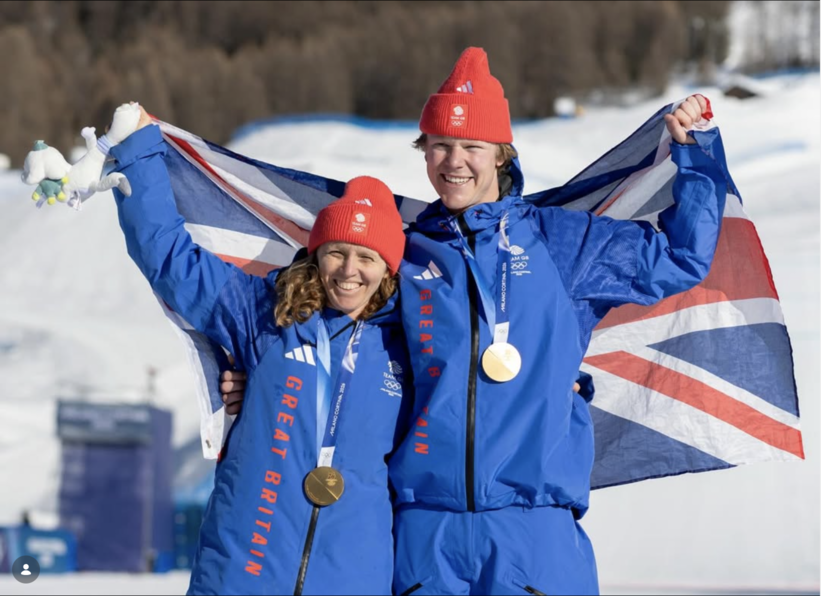
It seems strange to say, after the excitement Charlotte Bankes and Huw Nightingale won Britain’s first-ever gold medal on snow, but boardercross has often been looked down on as a discipline by many in the snowboard scene.
It’s no longer part of the X Games, rarely features in the pages of snowboard magazines, and its biggest stars tend to have followings numbering in the thousands, rather than the millions. There are various reasons for this: Some of it is purely down to aesthetics. Snowboardcross, as anyone who’s watched Lindsey Jacobellis’ disastrous Olympics from 2006 will know, is not a discipline that rewards style. Grabs and tweaks are more likely to lose you points than gain them, and races just don’t look as good as freestyle events in photos, or shortform videos.
"In the 90s, racers were derided as "gate-bashers", or referred to using homophobic slurs"
Some of it, I suspect, has to do with a deeply-ingrained prejudice about racing as “a skiers thing”, which dates back to at least the 90s. Snowboarders back then, who’d started borrowing tricks from skateboarding often looked down on riders they derided as “gate bashers”—and frequently (as snowboarding legend Peter Bauer told our sister title Whitelines recently) resorted to homophobic slurs. But despite this long-standing sniffiness, there’s a strong case to be made that boardercross is the best snowboard discipline at the Winter Olympics.
Think about it from a snowboarders’ point of view: the best argument for having our sport in the Olympics (a contest that was once the subject of boycotts, and that many core snowboarders claim not to care about, even now) is that it provides a huge platform for proselytising. “Until you get here, you don’t quite comprehend just how many more eyeballs there are on you,” Ben Kinnear, Mia Brookes’ coach, told me in an interview from Milano Cortina—and he’s not wrong. Statistics released by the European Broadcast Union showed that more than 20 million people—almost one-third of the UK population—tuned into the BBC’s Winter Olympics coverage in the first week alone.
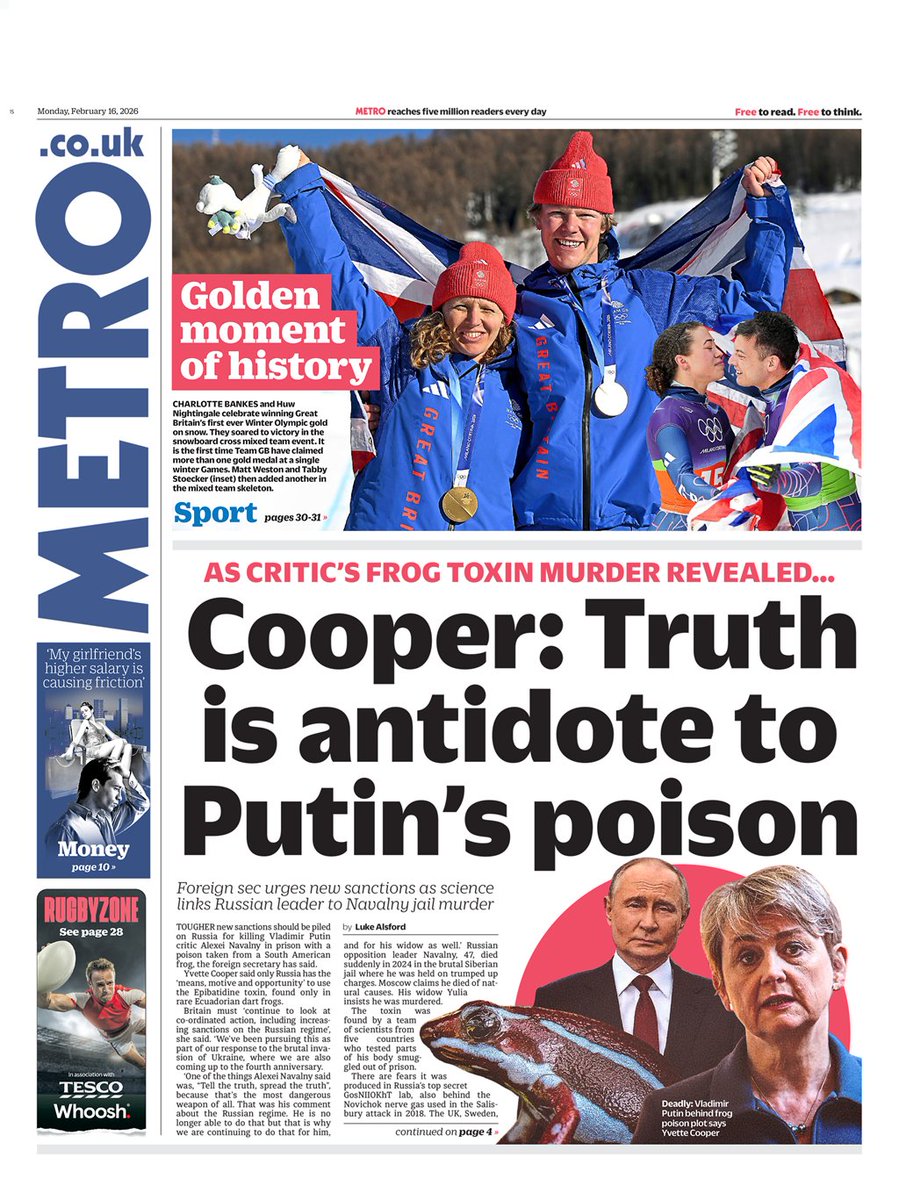
This is the one time, every four years, that snowboarding has a chance of appearing on newspaper front pages, on mainstream evening news bulletins, and featuring in ordinary pub conversations. So of course, you want to make sure it’s shown in the best possible light. Events like the women’s big air final (which, as Ben put it, “showcased amazing progression”), or the men’s halfpipe final (which one experienced judge told me was “the raddest, most progressive I’ve ever seen”) were definitely put on a great show. But a great show for who?
The problem with these displays of cutting edge freestyle riding is that despite the best efforts of Ed Leigh and Tim Warwood in the commentary box, it’s not that easy for the general public to grasp what’s really going on. Everyone can see that Australian Val Guseli going huge in the pipe deserves a high score. But the intricacies of Ryusei Yamada’s off-the-heels double rodeo are tricky enough for many lifelong snowboarders to follow, never mind your nan sitting on her sofa. All too often, when watching the world’s best perform at their best, mainstream viewers see a bunch of people spinning similar-looking spins—and simply switch off.
"All too often, when watching the world’s best perform at their best, mainstream viewers see a bunch of people spinning similar-looking spins—and simply switch off"
Snowboardcross, on the other hand, is an event that everyone can understand: four people race down a course, and the first across the line wins. The fact that it’s head-to-head adds an exciting element that you don’t get in, say, alpine skiing, and the jumps and whoops bring a bit of jeopardy to the proceedings. If what we want from the Olympics, as snowboarders, is for lots of people to see our sport and go “that looks like fun, I want to give it a go” then this is the best event for it.
Of course, it’s not just the events themselves that make snowboarding look like fun. As Clare Balding noted several times from the central BBC studio in Cortina, one of the things that makes competitive snowboarding—and indeed, freeskiing—unique is the almost universal respect between the riders. There aren’t many Olympic events, summer or winter, where you’ll see people genuinely cheering for their rivals, or hugging the person who’s just knocked them off the podium.
It’s true that you tend to see this less with racing disciplines like snowboardcross than with freestyle. But with mixed snowboardcross, the new relay discipline introduced for these Games, you get that kind of camaraderie in spades—and not just within teams, where you’d expect it, but between teams too. Perhaps there’s something about competing alongside a teammate, but there were lots of hugs of mutual respect on the finish line of both the runners-up race and the gold-medal race.
While the mixed format is mildly more complicated, it’s still instantly comprehensible to the casual viewer. And I also loved the way mixed snowboardcross gave the headline slot, the final leg, to the women. Who can forget the excitement of seeing Charlotte Bankes make her incredible passing move on Michela Moioli on the last corner of the course? Especially after she’d been so cruelly denied in the individual event just a few days before.
"Let's embrace snowboardcross for what it is—the ultimate gateway drug to the joys of our sport"
I’m aware that as a Brit, I may be bringing some bias to this argument. I’ve followed Charlotte Bankes’ run of bad luck in previous Olympics, and interviewing her in the run up to these Games, I couldn’t help but be impressed by her tenacity in the face of injuries and setbacks that would have ended many careers. Like many people in the UK, I felt almost personally invested in seeing her win the medal her talents deserved this time around, at her fourth, and possibly final Olympics. But it wasn’t just her or Huw’s individual brilliance that made me a fan of mixed snowboardcross. It was watching both that and the big air with friends and family who don’t snowboard—and guaging their reactions.
Don’t me wrong, I loved the freestyle events—particularly the women’s big air and the men’s pipe final—as much as any follower of competitive snowboarding. But these are disciplines that preach to the choir. If snowboarders want to use the Olympics to spread the gospel, then we need to stop being sniffy about snowboardcross. Next time around, I propose we stick the mixed race first in the schedule, and embrace it for what it is—the ultimate gateway drug to the joys of our sport.